Most people judge a nail clipper by how sharp it looks or how much it costs. We wanted a number instead, so we measured it: how much force each clipper puts on the blade to get through a nail.
We tested eight clippers: from cheap online imports and drugstore staples, to a premium salon brand, to a high-end Japanese clipper, alongside the EDJY Fingernail Cutter. The short answer: EDJY needed less than half the force of the best traditional clipper we tested, and about one-third the force of the worst.
How we tested
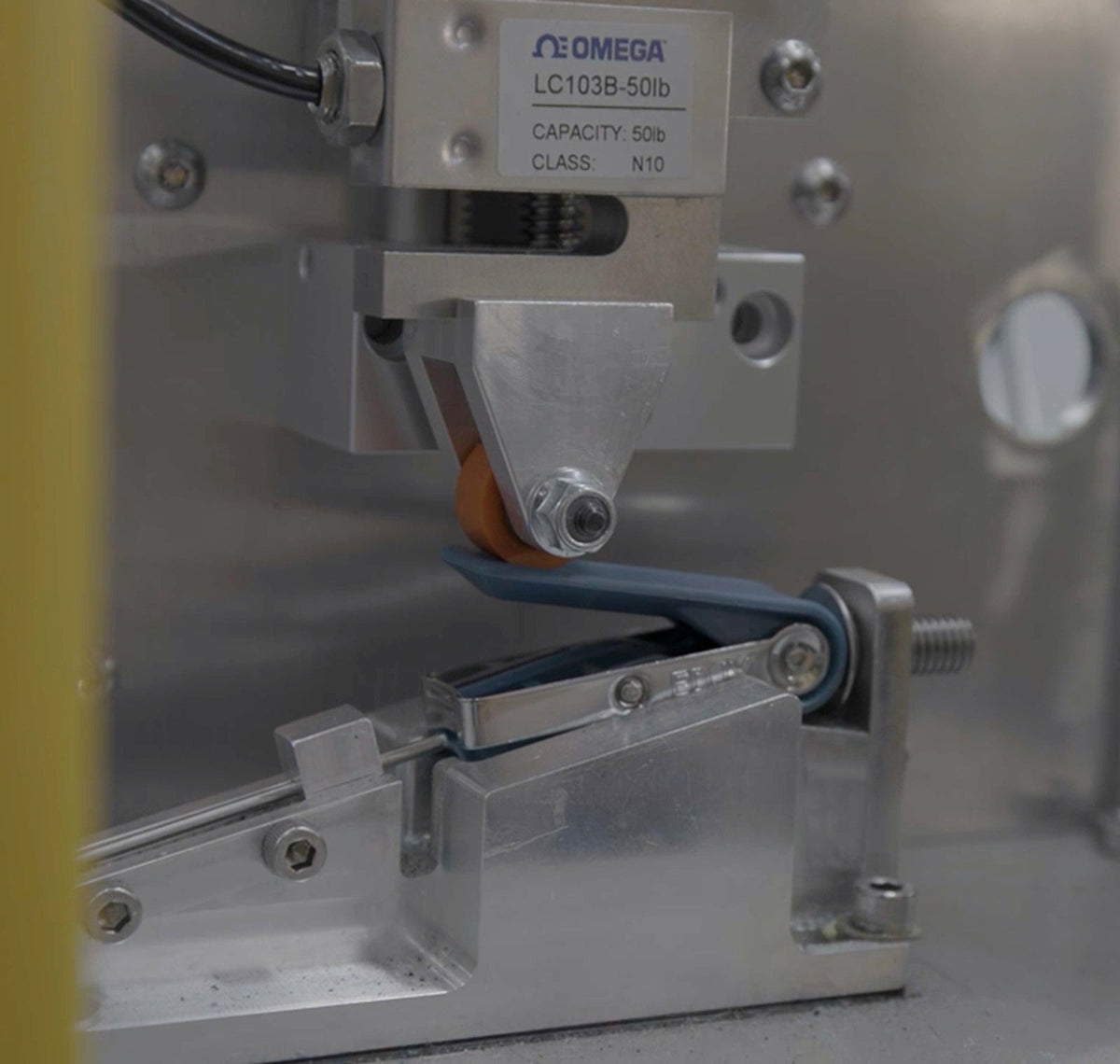
Real nails vary too much from person to person to give repeatable results, so we used two nail-like test materials instead. One is hard and rigid, like a fingernail. The other is tough and flexible, closer to a thick toenail. We recorded the average force at the blade of each clipper as it cut through both materials. Lower is better: it means the clipper is doing the work instead of your hand.
What the results show
On the hard material, the seven traditional clippers required between 48.8 and 68.6 lbs, while EDJY required 22.3. EDJY required 64% less force than the average clipper, and 54% less force than the high-end Japanese clipper that led the rest of the field.
The tough, flexible material told the same story. The traditional clippers ranged from 42.1 to 64.1 lbs, and EDJY needed 21.5, which is 59% less than their average.
Premium materials, like those used to manufacture the higher-end clippers, gave the pricier options an advantage: the high-end Japanese and premium salon clippers beat the budget ones. But even the best of them sat much closer to a cheap import than to EDJY. Spending more on a traditional clipper gets you a better version of the same design, but the design is the problem.
Why EDJY takes less force
Every traditional clipper works the same way: two blades close on the nail from both sides and squeeze until the nail fractures. That takes a lot of force, and most of it goes into crushing rather than cutting. There are four design decisions that help EDJY work differently:
One blade that slices instead of two that crush. A single, sharp edge moves through the nail the way a knife moves through food. There's no second jaw to push against, so the force goes into the cut.
A blade that stays sharp. On a traditional clipper, the two blades strike each other every time you use it, creating a dull blade that needs even more force. EDJY's patented blade stop keeps its blade from touching anything but your nail, and the blade is made from hardened stainless steel rated 60+ HRC.
An edge shaped to your nail. Nails curve in two directions. EDJY's double-radii blade follows both curves, so it cuts the whole width of the nail evenly instead of pinching one spot first.
The lever sits over the cut. Traditional clippers put the lever on the side opposite the blade, far from where the cutting happens. EDJY places it directly above the blade, which gives you more leverage and more control.
Why cutting force matters
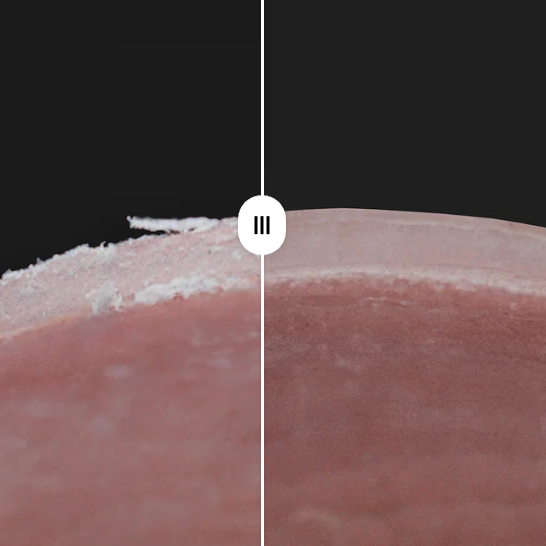
Cleaner cuts and healthier nails. High force is a sign of crushing which fractures the nail, leaving a rough, jagged edge that can peel, split and snag. Traditional clippers come with a file to remedy the damage caused by the underlying device. A clean slice leaves a smooth edge that doesn't need filing.
Better control. The harder you have to squeeze, the more likely the clipper is to slip or jump when the nail finally gives way. Less force means a steadier hand and fewer cuts that go too short.
Easier for everyone to use. For people with arthritis, a weak grip or limited dexterity, a clipper that needs 60+ lbs can make trimming a painful chore. Cutting that to around 22 lbs makes a real difference.
No flying clippings. When a crushed nail finally fractures, the stored-up energy sends the clipping across the room. A slicing cut doesn't build up that energy, so the clipping falls into EDJY's built-in cavity instead of onto the floor.
Frequently asked questions
How much force does it take to cut a fingernail with a nail clipper?
In our lab testing, seven traditional nail clippers needed an average of about 61 lbs of force at the blade to cut a hard, rigid nail-like material and about 53 lbs for a tough, flexible one. The EDJY Fingernail Cutter needed about 22 lbs on both.
Do expensive nail clippers take less force to use?
Somewhat. A high-end Japanese clipper was the best of the traditional clippers we tested, needing about 49 lbs on the hard material, while the budget clippers needed 60 to 69 lbs. But price didn't change the basic design: every traditional clipper still crushes the nail between two blades. The EDJY Fingernail Cutter, which uses a single blade, needed less than half the force of the high-end Japanese clipper.
Why does the EDJY Fingernail Cutter need less force than a traditional clipper?
A traditional clipper squeezes the nail between two blades until it fractures. EDJY uses one sharp blade made from hardened stainless steel (60+ HRC) that slices through the nail instead, with a double-radii edge shaped to the nail's curves and a lever placed directly above the cut for better leverage and control.
Why does cutting force matter for nail health?
More force usually means more crushing. Crushing fractures the nail instead of cutting it, which leaves a rough, jagged edge that can lead to peeling, splitting and snagging. Excess force also makes a clipper harder to control, which increases the chance of slipping, and makes trimming harder for people with arthritis, weak grip or limited dexterity.
The takeaway
If a nail clipper takes a hard squeeze to use, it's crushing your nails. Our testing showed that no traditional clipper, at any price, came close to the force needed by a single sharp blade. The EDJY Fingernail Cutter makes a cleaner cut with less than half the effort. Precision manufactured. Lifetime warranty. Made in the USA.